TOP SECRET / RYBAT / NOFORN
CENTRAL INTELLIGENCE AGENCY
COPY 1 OF 3
NO FOREIGN DISSEM
NO FOREIGN DISSEM
DIRECTORATE OF PLANS • AFRICA DIVISION
CASE FILE: WIROGUE
Post-Operation Assessment — Project PROP
I.OPERATION SUMMARY
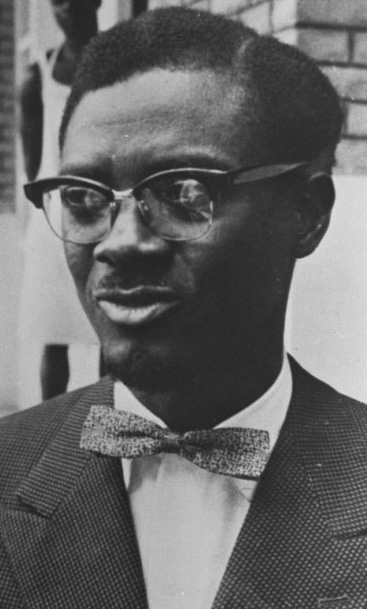
Subject, 1960. TERMINATED
| OBJECTIVE: | Removal of LUMUMBA, Patrice as political factor in Congo |
| TIMELINE: | August 1960 — January 1961 |
| OUTCOME: | Objective achieved. Subject terminated 17 January 1961. |
| METHOD: | Indigenous asset activation with parallel liaison coordination |
| US EXPOSURE: | Minimal. No direct participation in termination event. |
| ATTRIBUTION RISK: | Acceptable. Plausible deniability maintained. |
This assessment is prepared pursuant to DCI directive requiring post-operation analysis of all RYBAT-level activities. Purpose: to identify lessons applicable to future operations of similar scope.
II.WHAT WORKED
LOCAL ASSET DEVELOPMENT
Indigenous assets MOBUTU and TSHOMBE proved reliable throughout. Early cultivation (1959-60) paid dividends. Both assets demonstrated willingness to act decisively when opportunity presented. Recommendation: Continue investment in long-term asset development in target countries.
LIAISON COORDINATION
Belgian service cooperation exceeded expectations. Parallel operation structure allowed burden-sharing while maintaining compartmentalization. Brussels provided critical logistical support without requiring explicit coordination on terminal phase.
DENIABILITY ARCHITECTURE
No Agency personnel present at termination. No Agency equipment utilized in terminal phase. All actions attributable to local political dynamics. Structure validated: enable, do not execute.
POLITICAL PREPARATION
Subject successfully isolated from international support prior to action. UN marginalized. Soviet bloc unable to intervene effectively. Media pre-positioning established subject as "threat to stability" in advance of termination.
OPERATIONAL TIMING
Transition between administrations (Eisenhower → Kennedy) provided optimal cover. Incoming administration inherited situation as fait accompli. Continuity of policy assumed without explicit re-authorization requirement.
The transition window. They learned that too. Eisenhower authorized. Kennedy inherited. No fingerprints on either. November 1963 would fall in another transition — Johnson inheriting what Kennedy never authorized. The same window. The same deniability. — CDJ
III.WHAT DID NOT WORK
TECHNICAL METHOD (BIOLOGICAL)
Agent GOTTLIEB delivered biological materials to LEOPOLDVILLE Station September 1960. Materials never deployed. Station Chief assessed method as overcomplicated for operational environment. Lesson: Technical sophistication creates failure points. Simple methods preferred.
Sidney Gottlieb. The poisoner. He flew to the Congo personally, carrying toxins in a diplomatic pouch. But they didn't use his poison. Too complicated. Too traceable. They learned. By Dallas, no exotic methods. Just rifles. — CDJ
CUSTODY CHAIN
Subject transferred between multiple parties prior to termination. Each transfer created documentation opportunity. Recommend: Minimize handoffs. Terminal action should follow immediately upon acquisition when operationally feasible.
MEDIA AFTERMATH
International reaction exceeded projections. African bloc response particularly severe. UN investigation initiated (ongoing). Lesson: Post-action media management requires same attention as operational planning.
UN FACTOR
Secretary-General HAMMARSKJÖLD proved more persistent than anticipated. His investigation remains active concern. Recommend: UN leadership should be assessed as potential complicating factor in future operations.
NOTE: The Hammarskjöld factor was resolved September 1961. Aircraft incident. File separately.
IV.RECOMMENDATIONS FOR FUTURE OPERATIONS
Based on PROP experience, the following operational principles are recommended for RYBAT-level actions:
- INDIGENOUS SOLUTIONS PREFERRED Local assets reduce attribution risk. Contracted personnel with existing grievances provide built-in motivation and plausible alternative narratives.
- SIMPLIFY METHOD Complex technical approaches create failure points. Conventional methods, properly executed, are preferable to sophisticated alternatives that require specialized deployment.
- CONTROL THE AFTERMATH Successor regime must be identified and prepared in advance. Power vacuum creates unpredictability. Transition plan as important as termination plan.
- MEDIA PRE-POSITIONING Establish target as threat to stability, peace, or American interests well in advance of action. Post-action narrative should confirm pre-existing public perception.
- COMPARTMENTALIZATION Minimize cable traffic for terminal operations. Verbal authorization preferred. No written orders linking senior leadership to specific actions.
- TIMING Political transitions provide optimal cover. Exploit succession uncertainty. Incoming leadership inherits outcomes without explicit authorization burden.
Read this list again. Then read the Warren Commission's description of Lee Harvey Oswald. Indigenous. Simplified. Compartmentalized. They're describing the template. — CDJ
V.APPLICABILITY ASSESSMENT
Lessons derived from PROP may have application to ongoing or anticipated operations in the following areas:
- CUBA — Multiple tracks active. PROP methodology under consideration.
- DOMINICAN REPUBLIC — Asset development advanced. TRUJILLO increasingly problematic.
- SOUTHEAST ASIA — Emerging. DIEM situation requires monitoring.
- DOMESTIC — Contingency planning only. No active authorization.
This assessment should be incorporated into training materials for future Africa Division personnel and made available to Western Hemisphere Division for reference regarding ongoing Cuba operations.
• • •
Prepared by: BRONSON, T.W.
Office of Operations Analysis
Approved by: BISSELL, Richard M.
Deputy Director for Plans
Distribution: DCI (1), DDP (1), C/AF (1)
Destroy after reading. No copies to be retained.
This document was classified for forty years. When portions were finally released under the JFK Records Act, no one noticed. It was buried in 50,000 pages of Africa Division records. Not hidden. Just lost in the flood.
Trujillo was assassinated three months after this memo. The weapons came from the CIA. Diem fell in November 1963 — three weeks before Dallas. The template worked.
The last item on that applicability list — the redacted one — that's the one that matters. Domestic. Contingency planning only. Until it wasn't contingency anymore. — CDJ
Trujillo was assassinated three months after this memo. The weapons came from the CIA. Diem fell in November 1963 — three weeks before Dallas. The template worked.
The last item on that applicability list — the redacted one — that's the one that matters. Domestic. Contingency planning only. Until it wasn't contingency anymore. — CDJ