SUBJECT
DULLES, Allen Welsh
Director of Central Intelligence (1953-1961) / Deputy Director (1951-1953)
DATE OF BIRTH
7 April 1893
PLACE OF BIRTH
Watertown, New York
DATE OF DEATH
29 January 1969
EDUCATION
Princeton (1914), George Washington Law
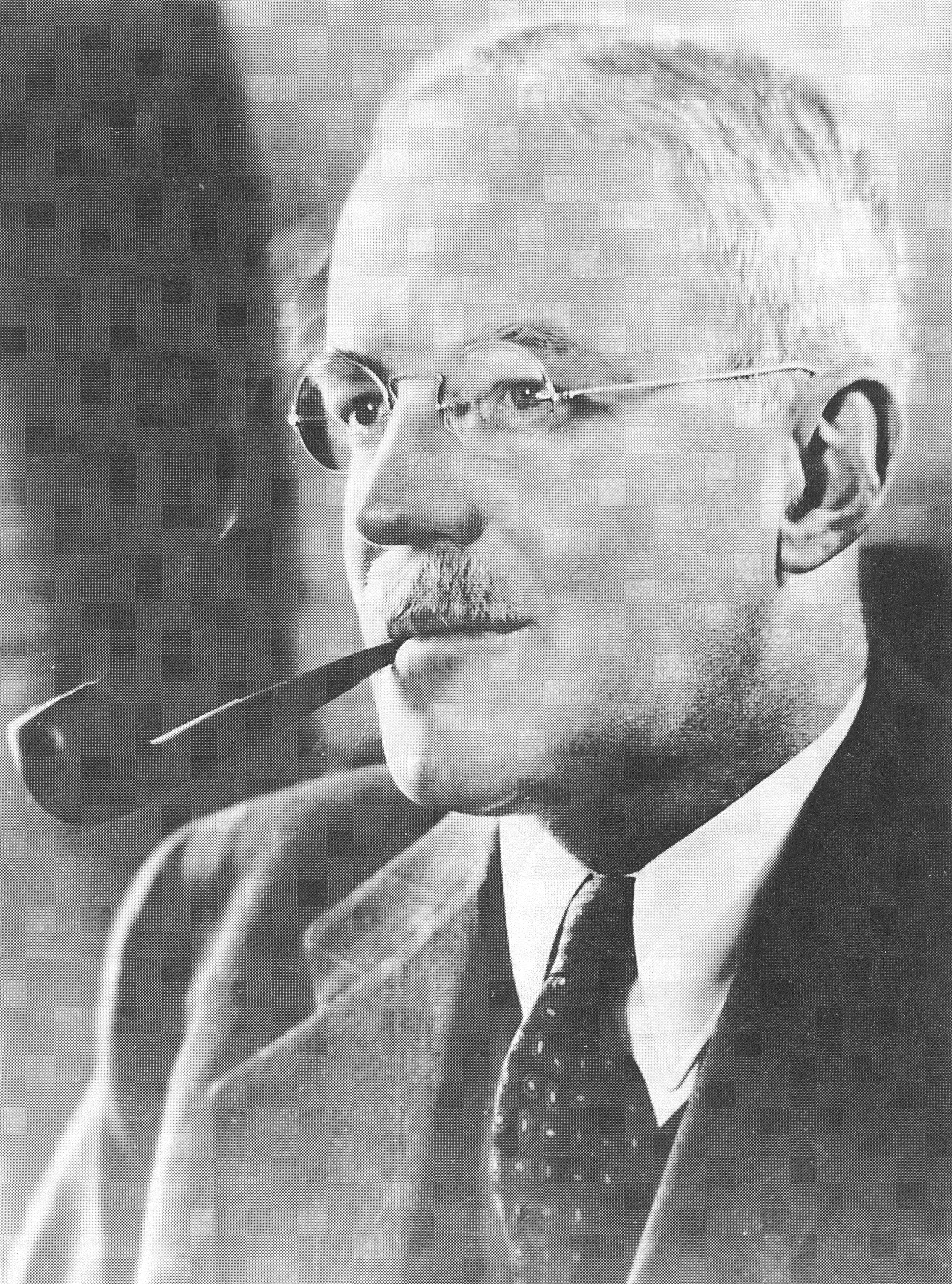
Director of Central Intelligence, 1953-1961. Distinguished bearing, silver hair, wire-rimmed spectacles, pipe. The image of a Georgetown gentleman. The man who built the machine.
GRANDFATHER
John Watson Foster — Secretary of State under President Harrison (1892-1893)
UNCLE
Robert Lansing — Secretary of State under President Wilson (1915-1920)
BROTHER
John Foster Dulles — Secretary of State under President Eisenhower (1953-1959)
Three generations. Two brothers. Four Secretaries of State. They did not serve the Republic. They believed they were the Republic. — CDJ
Following diplomatic service in Vienna, Bern, and Constantinople, subject joined Sullivan & Cromwell, Wall Street's preeminent international law firm. Rose to partnership. Specialized in corporate clients with European operations.
1926-1935
Represented German industrial interests including I.G. Farben, Krupp Steel, and consolidated German banking concerns. Facilitated American investment in German reconstruction.
1933-1934
Continued German client relationships following National Socialist assumption of power. Brother John Foster negotiated directly with Reich officials on bond restructuring. Firm maintained Berlin office until 1935.
Subject and brother maintained professional relationships with German industrial concerns during period of Nazi consolidation. Sullivan & Cromwell represented entities later implicated in rearmament and forced labor programs. No evidence of ideological sympathy; relationships characterized as purely commercial. File note: "AWD understood the value of access. He did not ask where the money came from or what it built."
They knew. Everyone on Wall Street knew. But business was business, and Germany was a client. When the war came, they simply changed clients. The facility with which they made this transition tells you everything. — CDJ
Subject recruited by William Donovan for Office of Strategic Services, November 1942. Assigned Bern, Switzerland as station chief—the most important neutral listening post in Europe.
1942-1944
Established agent networks throughout occupied Europe. Recruited sources within German military and intelligence services. Developed relationships with anti-Hitler resistance elements.
FEB-MAY 1945
OPERATION SUNRISE — Conducted secret negotiations with SS General Karl Wolff for surrender of German forces in Italy. Negotiations conducted without Soviet knowledge. Stalin formally protested to Roosevelt. Operation proceeded regardless.
Operation Sunrise established template for post-war intelligence operations: unilateral action, limited executive oversight, willingness to engage with unsavory actors when strategically advantageous. Subject demonstrated that secret negotiations with Nazi officials could be conducted, justified, and—ultimately—approved. Lesson noted.
1945-1946
Post-war activities included identification and recruitment of former German intelligence officers for anti-Soviet operations. Subject instrumental in early stages of what became OPERATION PAPERCLIP (scientists) and OPERATION BLOODSTONE (intelligence assets). Specific recruitment decisions CLASSIFIED.
The first betrayal of Allied trust. There would be others. In Bern, Allen Dulles learned that the enemy of your enemy could be useful—and that yesterday's Nazi could be tomorrow's asset. He never unlearned this. — CDJ
National Security Act of 1947 established Central Intelligence Agency. Subject served as consultant, then Deputy Director of Plans (covert operations), then Deputy Director of Central Intelligence under General Walter Bedell Smith.
1948
Drafted policy paper establishing covert action as permanent intelligence function. Argued for "plausible deniability" doctrine—operations designed so Executive could credibly deny knowledge.
1951
Appointed Deputy Director. Brother John Foster simultaneously serving as foreign policy advisor to Republican Party and anticipated Secretary of State in future Eisenhower administration.
FEB 1953
Appointed Director of Central Intelligence by President Eisenhower. Brother John Foster appointed Secretary of State. For the next six years, the Dulles brothers controlled both overt and covert American foreign policy. No significant decision was made without their coordination.
The doctrine forms here, in these years. Democracy is inefficient. The public cannot be trusted with difficult truths. Some governments are not acceptable. Someone must decide. In Allen Dulles's mind, that someone had always been men like himself—educated, connected, certain. The American people had a role in this arrangement: to be protected from knowledge that might disturb their sleep. — CDJ
During subject's tenure as DCI, the Agency conducted the following major covert operations:
IRAN — 1953
OPERATION AJAX. Prime Minister Mossadegh removed. Shah restored to power. British petroleum interests secured.
GUATEMALA — 1954
OPERATION PBSUCCESS. President Árbenz removed. Military junta installed. United Fruit Company interests secured. Subject and brother held stock in United Fruit.
INDONESIA — 1958
Sukarno destabilization attempted. CIA pilot Allen Pope shot down and captured. Operation exposed. Failure.
CONGO — 1960
Prime Minister Patrice Lumumba. Assassination authorized at highest levels. Subject transmitted presidential intent to station. See separate file: OPERATION WIZARD.
CUBA — 1960-1961
Castro removal. Multiple tracks. Bay of Pigs invasion. Failure. See separate file.
The pattern is the confession. How many times must a man do something before we call it his nature? Iran, Guatemala, Indonesia, Congo, Cuba. Each time a government failed to meet Allen Dulles's definition of acceptable. Each time the solution was the same. The only variable was the degree of success. — CDJ
The Bay of Pigs operation—inherited from the Eisenhower administration—would define the end of subject's government career.
MAR 1960
President Eisenhower approved covert program to train Cuban exile force. Subject oversaw planning.
JAN 1961
President Kennedy inaugurated. Inherited Cuba operation. Subject briefed new President, assured him of success.
17-19 APR 1961
Bay of Pigs invasion. Brigade 2506 landed at Bahía de Cochinos. Air cover requests denied by President. Subject had anticipated Kennedy would authorize additional support once operation was underway. Miscalculation proved fatal.
Post-operation analysis determined subject had presented operation to President with significant omissions regarding probability of success without direct U.S. military intervention. Subject's expectation: once exiles were engaged, President would have no choice but to escalate. The President chose differently. Subject reportedly stated this demonstrated Kennedy's "lack of nerve" and "fundamental unseriousness about the Communist threat."
He thought Kennedy would blink. Every President before him had blinked. You put men on a beach, you manufacture a crisis, and the Commander in Chief does what you've already decided he must do. But Kennedy didn't. And Allen Dulles never forgave him for it. Never. — CDJ
SEPT 1961
Subject submitted resignation "at the President's request." Public statement described mutual agreement and subject's desire to return to private life. Kennedy reportedly stated privately that he wished to "splinter the CIA into a thousand pieces and scatter it to the winds." Subject was made aware of this comment.
NOV 1961
John McCone appointed as successor. Subject returned to private legal practice. Maintained extensive contact with former Agency colleagues. Continued to receive intelligence briefings through unofficial channels. Remained active in Georgetown social circles frequented by Agency personnel.
A man does not forget this. He had spent eight years building the most powerful secret organization in the free world. He had toppled governments on four continents. He answered to no one but the President—and then only when he chose to. And then a young man, a senator's son who had never done anything harder than win an election, dismissed him like a servant who had broken the china. A man does not forgive this. A man like Allen Dulles does not forgive. — CDJ
Following departure from government, subject remained in Washington, D.C. Maintained residence in Georgetown. Continued association with intelligence community.
1961-1963
Subject consulted on various matters. Maintained contact with anti-Castro Cuban exile leadership. Continued relationship with organized crime figures utilized in Castro assassination planning. Specific activities during this period PARTIALLY DOCUMENTED.
22 NOV 1963
President Kennedy assassinated in Dallas, Texas.
29 NOV 1963
President Johnson appointed subject to Commission to investigate Kennedy assassination. Subject was only Commission member with intelligence background. Subject had been terminated by the man whose death he was now charged with investigating. No conflict of interest was noted.
The fox investigating the henhouse. The architect reviewing the ruins. Lyndon Johnson knew exactly what he was doing when he made that appointment. Whether it was to guarantee the truth would emerge or guarantee it would stay buried—that question answers itself. — CDJ
DEC 1963
Subject assumed active role in Commission investigation. Personally briefed Commission on intelligence matters. Served as primary liaison to CIA. Determined what Agency materials would be shared with Commission.
1964
Subject did not disclose to Commission: CIA-Mafia assassination plots against Castro. CIA surveillance of Oswald in Mexico City. Existence of CIA operational interest in Oswald. Extent of Agency penetration of Fair Play for Cuba Committee. These omissions were not discovered until Church Committee hearings, 1975.
SEPT 1964
Warren Report published. Conclusion: Lee Harvey Oswald acted alone. No conspiracy. Subject's contribution to this finding noted as "substantial."
Subject demonstrated consistent pattern of prioritizing operational outcomes over legal constraints, allied relationships, and democratic oversight throughout career. Subject viewed executive authority as obstacle to be managed rather than mandate to be obeyed. Subject maintained parallel authority structures and cultivated relationships outside normal chains of command.
Subject believed himself indispensable to national security. Subject operated on assumption that his judgment superseded that of elected officials.
Subject never faced accountability for operational failures or policy violations. Subject's role in post-1961 activities remains UNRESOLVED.
He was right about one thing. He was never held accountable. He died in his bed in 1969, a respected elder statesman, eulogized as a patriot. The files were sealed. The questions were not asked. The pattern was not acknowledged. And the lesson was learned by everyone who was watching: in the invisible government, there are no consequences. Only outcomes. — CDJ